The most common question we get from homeowners planning a new deck is some version of this: should I go with composite or pressure-treated wood? The honest answer is that both work well when installed correctly. The question is which one works better for your specific situation, your budget and how you plan to use the deck over the next ten to twenty years.
Here is a straight comparison based on what we see in the field after 25 years building decks across Greater Boston.
Pressure-Treated Wood: The Case For It
Pressure-treated lumber has been the standard decking material for decades because it works. It is chemically treated to resist rot, insects and moisture, it is readily available and it costs significantly less than composite alternatives at the point of purchase.
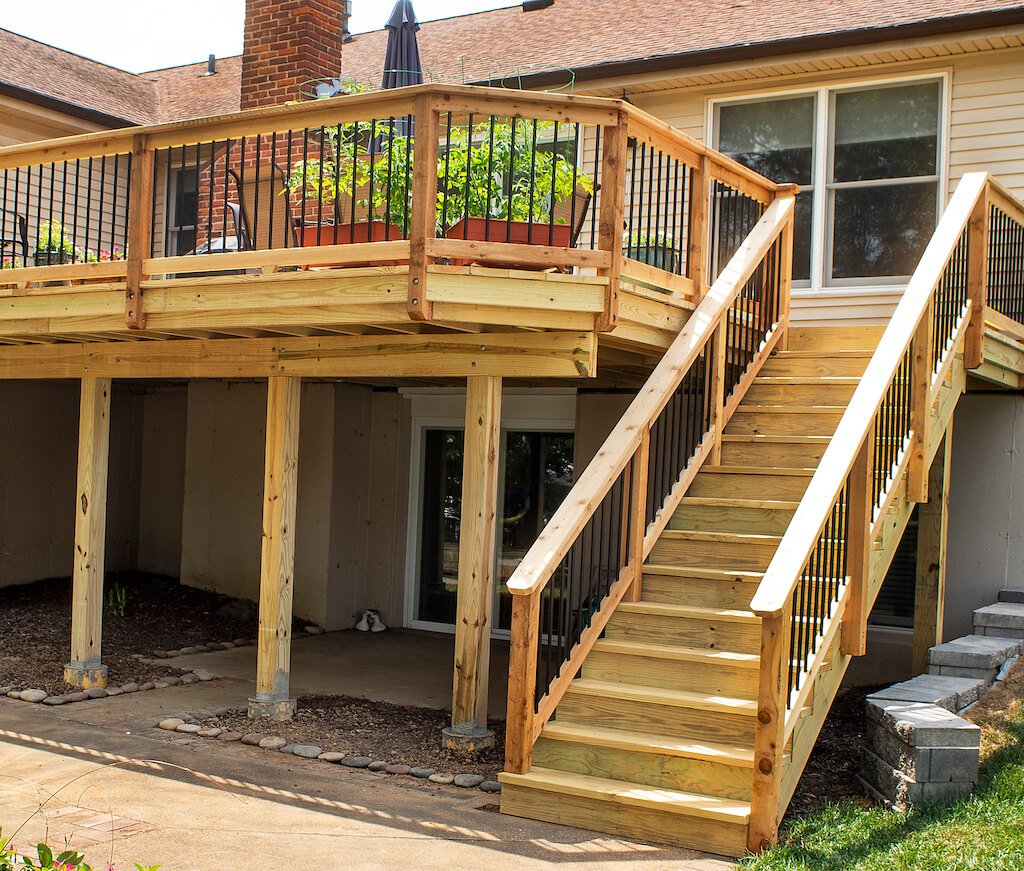
For homeowners on a tighter budget who are comfortable with the ongoing maintenance commitment, a well-built pressure-treated deck can look great and perform reliably for 15 to 25 years. The key word is well-built. The structural framing of any deck should always be pressure-treated regardless of what material you choose for the surface.
The Honest Drawbacks of Pressure-Treated
New pressure-treated lumber needs time to dry before it can be stained or sealed. Most installers recommend waiting 3 to 6 months after installation. After that initial wait, the deck needs to be cleaned and resealed every 1 to 2 years to maintain its appearance and slow weathering. In New England, where freeze and thaw cycles are severe, skipping maintenance years accelerates cracking, checking and greying significantly.
The real cost of a pressure-treated deck is not just the build price. It is the build price plus the labour and materials for ongoing maintenance over the life of the deck. When you factor that in, the gap between pressure-treated and composite narrows considerably over a 15 to 20 year period.
Composite Decking: What You Are Actually Paying For
Composite decking is manufactured from a blend of wood fibre and recycled plastic. The better composite brands, Trex, Azek and TimberTech being the most common in our market, produce boards that are highly resistant to moisture, fading, staining and the kind of surface checking you see in natural wood after a few New England winters.
The maintenance requirement is minimal. An annual cleaning with a garden hose and a mild detergent is typically all that is needed to keep a composite deck looking good for decades. Most premium composite products also carry 25 to 30 year warranty coverage against fading and staining, which is something pressure-treated lumber cannot offer.
One important note: composite decking boards are a surface material only. The structural posts, beams and joists supporting the deck should always be pressure-treated lumber regardless of which surface material you choose. No composite manufacturer recommends their product for structural framing members.
Side by Side Comparison
| Factor | Pressure-Treated Wood | Composite |
|---|---|---|
| Upfront Cost | Lower | Higher (30 to 50% more) |
| Annual Maintenance | Required every 1 to 2 years | Minimal, clean annually |
| Lifespan | 15 to 25 years with maintenance | 25 to 35 years |
| Appearance Over Time | Greys and checks without treatment | Holds colour and texture |
| Splinters | Possible as wood ages | None |
| Warranty | None | 25 to 30 years on premium brands |
| Environmental | Chemical treatment | Recycled content |
Which One Should You Choose?
If budget is the primary consideration and you are comfortable committing to annual maintenance, pressure-treated is a legitimate choice and we build excellent pressure-treated decks every season. If you want a low-maintenance deck that holds its appearance for decades and you are planning to stay in the home long term, the additional upfront investment in composite almost always makes financial sense when you factor in the avoided maintenance costs.
We work with both materials and we give every client our honest recommendation based on their specific situation rather than pushing them toward the more expensive option. If you want to talk through which makes sense for your project, call us at (617) 593-9145 and we will walk through it with you.